
Cathodic protection
The reference method for long-term protection of your buried metallic structures against electrochemical corrosion. Design, installation, inspection and maintenance by our CEFRACOR certified engineers.
Principle
What is cathodic protection?
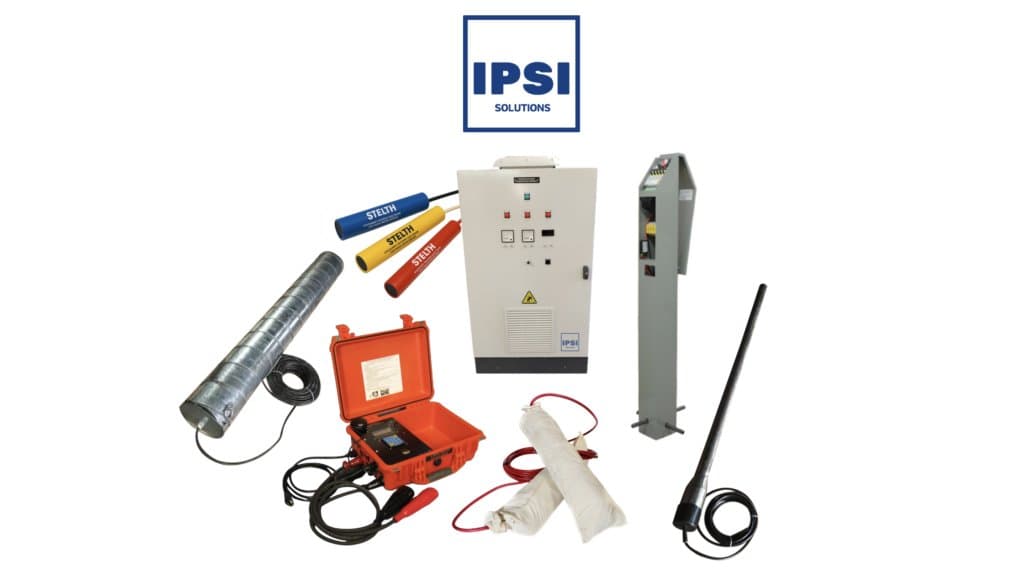
Cathodic protection is an electrochemical technique that prevents corrosion of a metallic structure by making it cathodic — that is, by supplying it with a protective electrical current.
There are two main methods: protection by impressed current (regulated external power supply) and protection by galvanic anodes (more active metals that corrode in place of the protected structure).
Two complementary methods
Impressed current (ICCP)
Active system with a current rectifier powering inert anodes (titanium, graphite). Ideal for large structures and extensive networks.
Galvanic anodes (GACP)
Passive system using zinc, magnesium or aluminum anodes. No external power supply, ideal for isolated or offshore structures.
Catalogue
Our cathodic protection equipment
A complete range selected for its reliability and performance in demanding industrial environments.
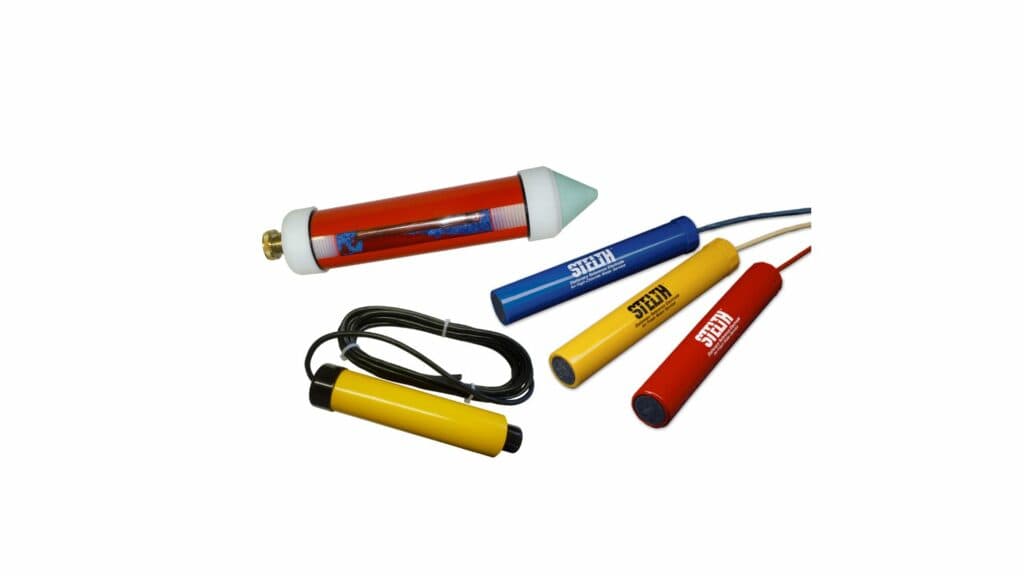
Reference electrodes
Cu/CuSO4 and Ag/AgCl electrodes for precise in-situ measurement of protection potentials, in soil or aqueous environments.
View products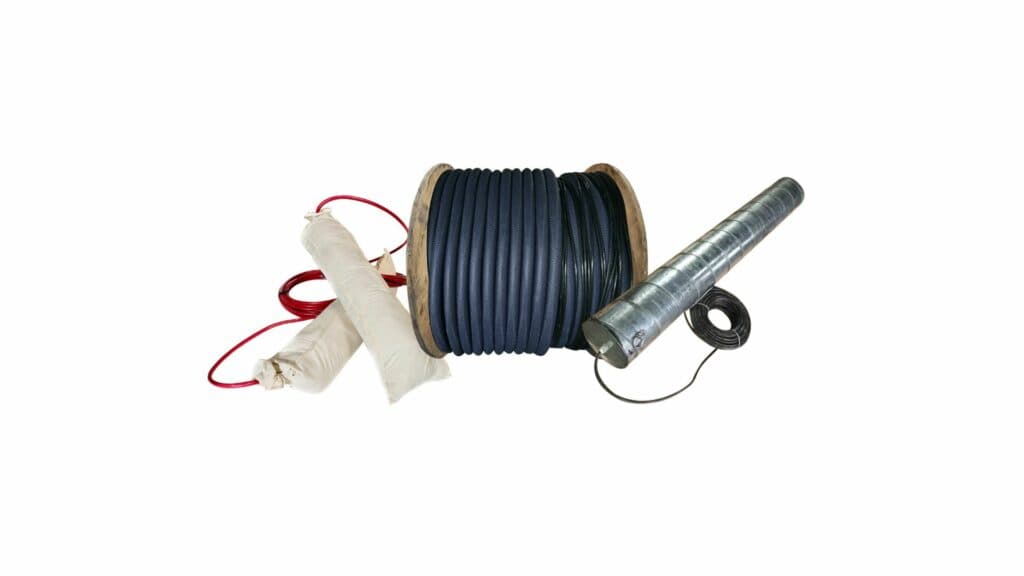
Anodes
Zinc, magnesium and aluminum anodes for galvanic protection of buried and submerged structures, without external power supply.
View products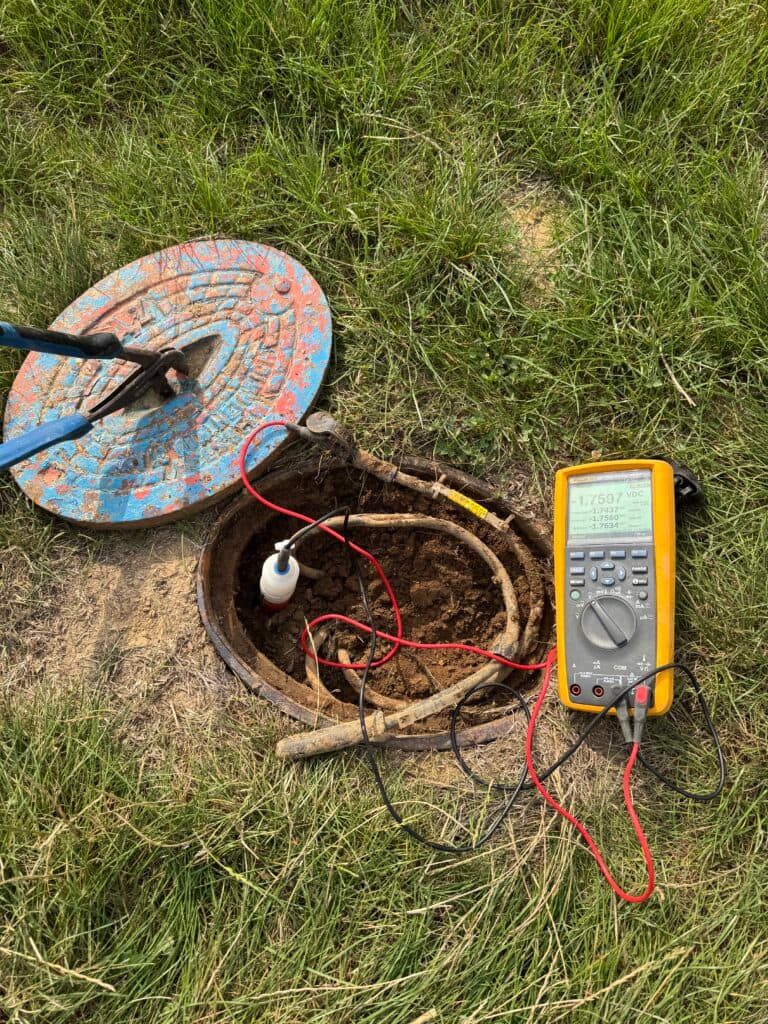
Measurement equipment
Test stations, field instruments and remote monitoring systems for continuous surveillance of protection potentials.
View products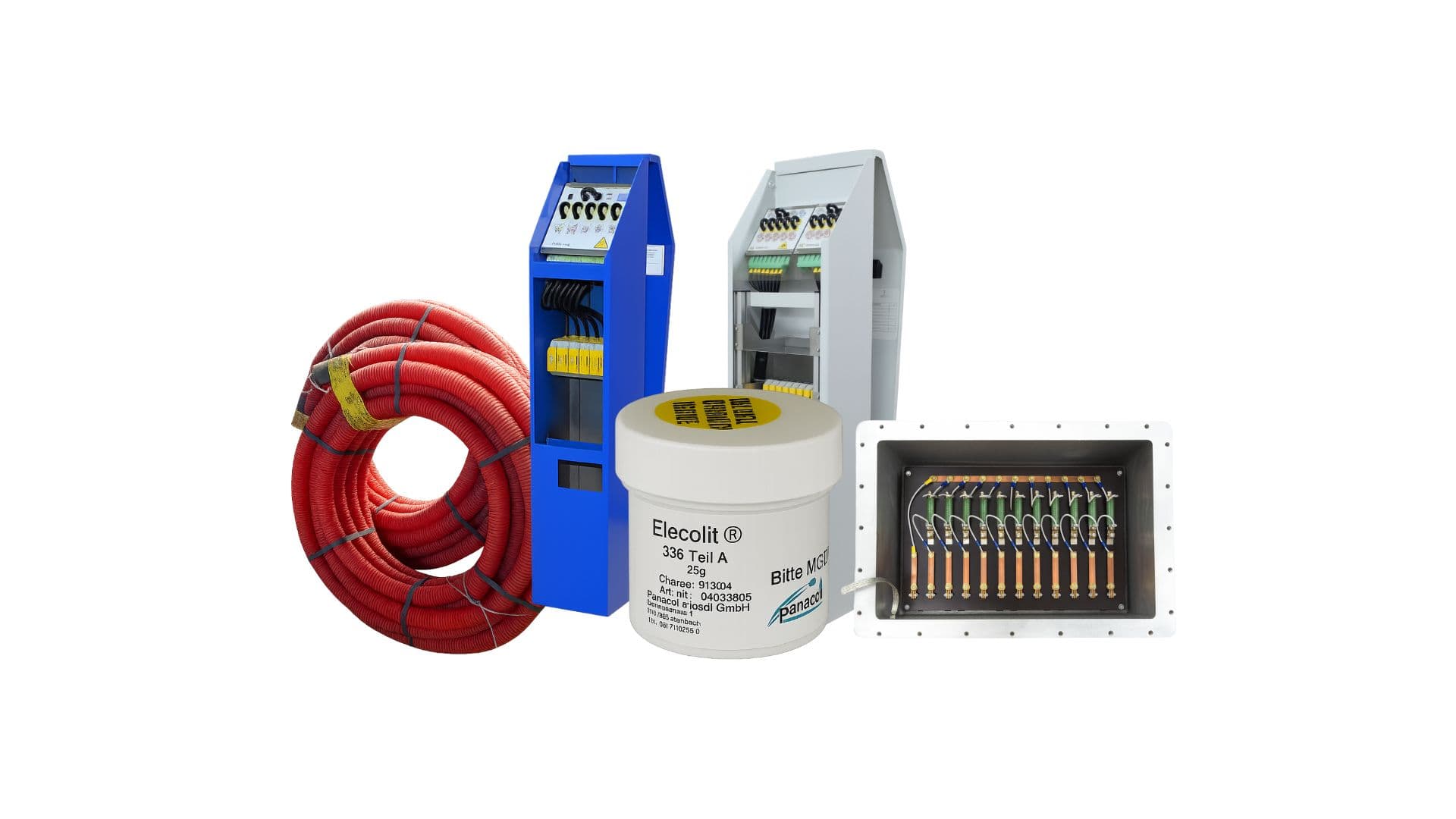
Accessories & connections
HMWPE cables, thermoset junctions, test posts and installation accessories for reliable and long-lasting systems.
View productsEngineering
Our technical studies
From preliminary design to commissioning, our certified engineers support you at every stage of your project.
Feasibility study
Corrosion risk analysis, review of existing data, preliminary recommendations and budget estimation.
Engineering study
System sizing, technology selection, current calculations, detailed technical specifications and execution plans.
Rehabilitation study
Diagnosis of existing systems, on-site measurements, rehabilitation recommendations and upgrade plan.
Controls & Inspections
Specialized inspection methods
State-of-the-art inspection techniques to assess the effectiveness of your cathodic protection and the condition of your coatings.
Technique for detecting and locating coating defects on buried pipelines. DCVG identifies and classifies defects by severity to prioritize repair interventions.
- Coating defect detection
- Severity classification
- Georeferenced defect reporting
Continuous measurement of pipeline protection potentials every meter along the route. CIPS evaluates cathodic protection effectiveness and identifies under-protected or over-protected areas.
- Potential mapping
- Protection assessment
- EN 12954 standard compliance
Coating defect localization method using an AC signal. Particularly suited to areas with high electrical noise or where cathodic current is insufficient for DCVG.
- Precise defect localization
- Noisy environments
- DCVG complement
References
Sectors of intervention
Our teams work on all types of buried or submerged structures requiring corrosion protection.
Natural gas networks
Installation and commissioning of cathodic protection systems on HTR/MTR/BTR natural gas transmission and distribution networks.
Oil pipelines
Protection of oil pipelines, gathering lines and transmission pipelines, including river crossings and high-risk areas.
Drinking water networks
Cathodic protection of ductile iron and steel pipes in water supply and distribution networks.
Port infrastructure
Protection of submerged and buried metallic structures in ports and maritime terminals.
Resources
Articles on cathodic protection
Understanding the EN 12954 standard for network cathodic protection
The EN 12954 standard defines cathodic protection criteria for buried pipelines...
How DCVG helps locate coating defects
Direct Current Voltage Gradient is an essential technique for pipeline inspection...
Choosing between impressed current and sacrificial anodes: a practical guide
The choice between ICCP and GACP depends on several factors: soil resistivity, surface to protect...
Browse cathodic protection equipment
All families of our cathodic protection catalogue, with live product counts.
Anodes27 products
Sacrificial and impressed current anodes, backfill and accessories.
Transformer-rectifiers14 products
Air and oil cooled units, automatic potential regulation.
Reference electrodes13 products
Cu/CuSO4 and Ag/AgCl electrodes, permanent and portable.
Measuring instruments34 products
Voltmeters, data loggers, current interrupters and remote monitoring.
Junction boxes & connections53 products
Measurement posts, junction boxes, cables and connection kits.
A cathodic protection project?
Our engineers are at your disposal to study your requirements and propose custom-built solutions.
Réponse rapide
Sous 48h
Expertise certifiée
Ingénieurs NACE
Support continu
Maintenance 24/7